Study: Hidden Fees in Gym Contracts 2026
Hidden gym fees and tangled cancellation rules can cost you hundreds. Learn to spot extra charges, follow notice requirements, and cancel via certified mail.
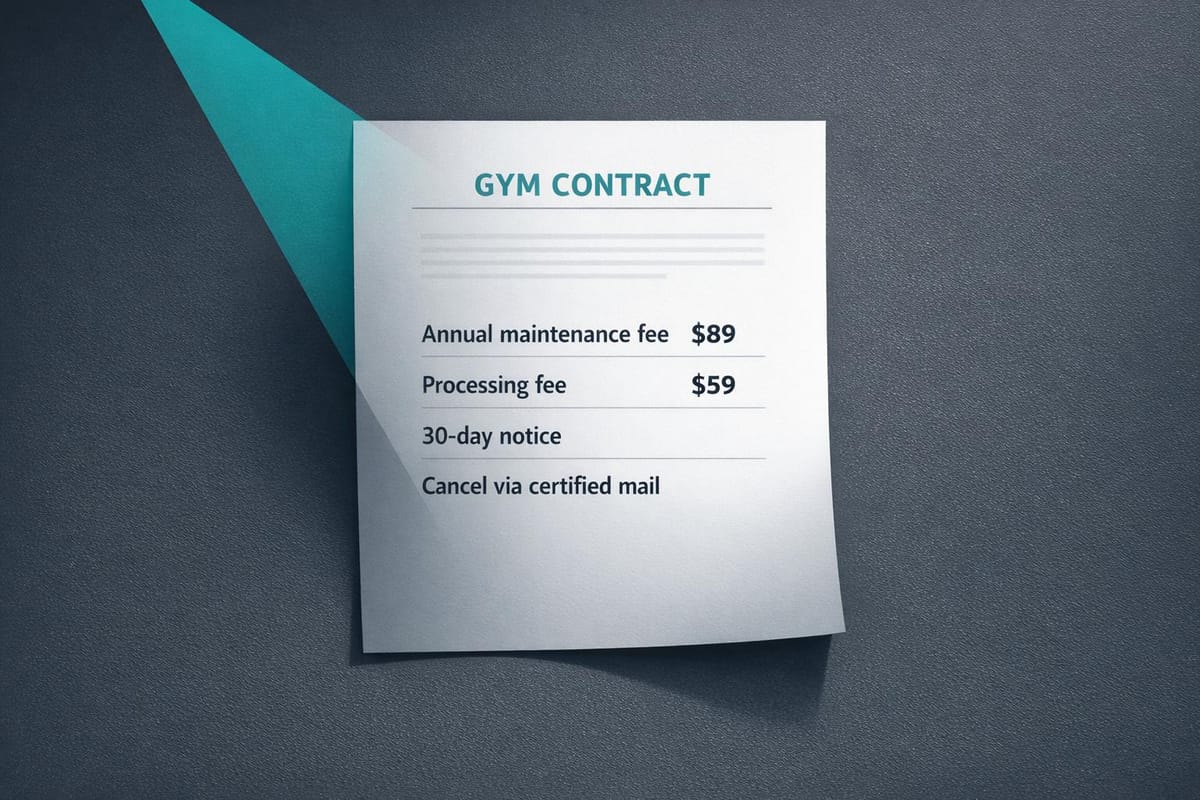
Here’s the deal: Gym memberships are often advertised as affordable, but hidden fees can make them far more expensive than you expect. In 2025, the average gym member paid $500 per year in extra charges like maintenance and signup fees. Add-ons like personal training and classes can push annual costs to $4,580. Worse, cancellation policies are often designed to trap you in unwanted payments.
Key findings:
- 40% of gym members encounter hidden fees.
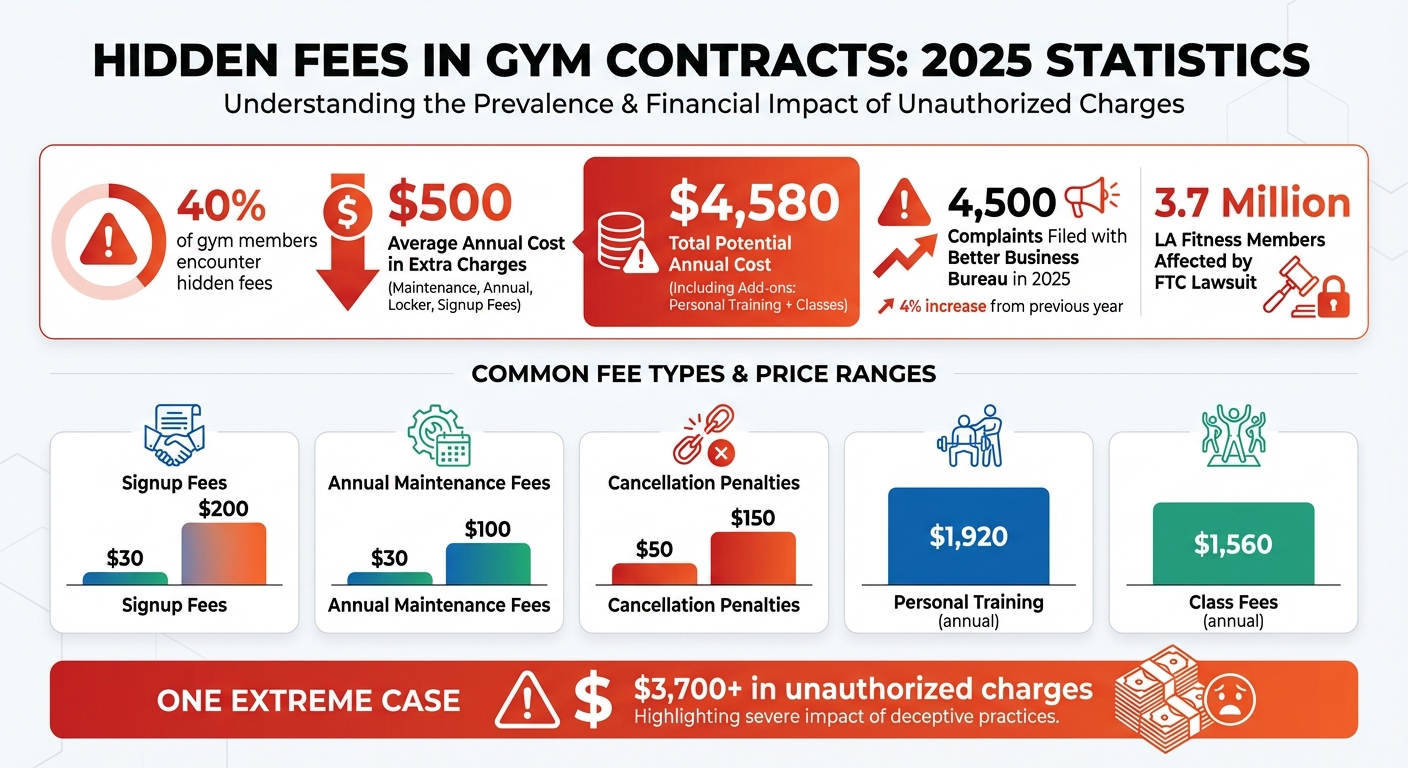
- Common fees include signup fees ($30–$200), annual maintenance fees ($30–$100), and cancellation penalties ($50–$150).
- Complaints about gyms rose 4% in 2025, with 4,500 complaints filed with the Better Business Bureau.
- The FTC sued LA Fitness and others for deceptive cancellation practices, affecting 3.7 million members.
What you can do:
- Read contracts carefully for all fees and cancellation policies.
- Cancel with certified mail to ensure proof of cancellation.
- Check your bank statements for recurring charges after cancellation.
- Use services like ByeGym to handle cancellations for a flat $45 fee.
If your gym is making it hard to cancel or hitting you with surprise charges, you’re not alone. The FTC and state laws are cracking down on these practices, but it’s up to you to stay vigilant. Read on to learn how to protect your wallet.
Hidden Gym Membership Fees Statistics 2025
The Hidden Cost of Joining a Gym
Types of Hidden Fees in Gym Contracts
Hidden fees in gym contracts often sneak up on members, adding unexpected costs to what seemed like a straightforward membership. Here's a breakdown of the most common ones:
Signup and Enrollment Fees
When joining a gym, you're likely to encounter upfront charges like initiation fees, which can range from $30 to $200. On top of that, many gyms require payment for the first and last month's dues right at the start [3][4]. Former gym employee Daniel Cabral shed light on this practice:
"It always felt disingenuous, as if those extra fees were deliberately deferred."
While these fees are almost always negotiable, most people don’t realize they can push back on them until it's too late - after they've already signed the contract [7]. These initial costs often pave the way for additional recurring charges later.
Annual and Maintenance Fees
A few months into your membership, you might notice charges labeled as "equipment maintenance" or "enhancement" fees popping up on your bank statements. These annual fees, typically $30 to $100, are often buried in the fine print and billed months after you join [3][7]. While they may seem small, they can add up quickly, inflating the total cost of your membership without much warning.
Cancellation Penalties
Trying to leave a gym can sometimes feel more expensive than staying. Cancellation fees are another way gyms make money, with charges ranging from $50 to $150 [3]. For example, Planet Fitness may hit you with a $58 cancellation fee [6]. But that’s not the worst of it - some members face even steeper costs. A recent investigation into LA Fitness revealed cases where members were charged over $3,700 in unauthorized fees after attempting to cancel [1][4].
One particularly extreme example involved a member who sent three certified cancellation letters but was still billed $420 monthly for unwanted personal training sessions [1][4]. These hidden penalties can turn a simple cancellation into a financial nightmare.
How Often Hidden Fees Occur and What They Cost
Hidden fees are a frustratingly common way gyms inflate their costs, as highlighted by 2025 data.
How Many Members Pay Hidden Fees
About 40% of gym members encounter hidden fees tucked away in their contracts[3]. The Better Business Bureau received roughly 4,500 complaints from gym members in 2025, marking a 4% increase from the previous year[1]. These numbers show just how widespread and impactful these fees can be.
Average Annual Cost per Member
On average, members pay around $500 per year in extra charges like maintenance, annual, locker, and signup fees[2]. When you add premium options like personal training (averaging $1,920 annually) and class fees (about $1,560 per year), the total yearly cost for a gym membership can climb to $4,580[2]. The Federal Trade Commission (FTC) has accused LA Fitness of using cancellation hurdles (why it's so hard to cancel) that have cost their 3.7 million members hundreds of millions in unnecessary fees[4][5]. These staggering figures highlight the need to dig deeper into how consumers can protect themselves from such practices.
Government Actions and Consumer Protection Laws
In 2025, regulators took decisive steps against gyms that bury fees in fine print and make cancellations a nightmare.
Federal and State Laws Targeting Hidden Fees
The Federal Trade Commission (FTC) ramped up enforcement of the Restore Online Shoppers' Confidence Act (ROSCA) and the FTC Act, focusing on shady cancellation practices that lock members into recurring charges they didn’t want. In August 2025, the FTC filed a lawsuit in the U.S. District Court for the Central District of California against Fitness International, LLC and Fitness & Sports Clubs, LLC - operators of LA Fitness, Esporta Fitness, and City Sports Club. The lawsuit accused these companies of charging hundreds of millions of dollars in unwanted fees by making cancellations "exceedingly difficult" and failing to inform members that they could cancel add-on services separately. As of January 26, 2026, the case is still ongoing[4].
On the state level, California, Rhode Island, and Virginia introduced new rules starting January 1, 2025, to demand fee transparency and outlaw unnecessary charges tied to memberships. These efforts reflect growing concerns about hidden fees that were highlighted earlier[8].
How Regulators Enforce These Rules
The FTC is pushing for permanent injunctions to stop unfair practices and is also seeking monetary judgments to reimburse consumers who were charged hidden fees[4]. They’re cracking down on tactics like forcing members to cancel in person or requiring certified mail for cancellations. The LA Fitness lawsuit, which involves over 600 locations and more than 3.7 million members across the country, illustrates just how widespread these issues are[4]. By mid-2025, tens of thousands of gym members had already reported struggles with cancellation policies, highlighting the urgent need for stronger protections. If you encounter similar issues, you can report them directly to the FTC at ReportFraud.ftc.gov. You can also find guides on how to cancel gym memberships to avoid these common pitfalls.
How to Protect Yourself from Hidden Fees
To avoid falling victim to sneaky charges, take these steps to protect your wallet.
Read Your Contract Carefully Before Signing
Before handing over your payment details, take the time to read every part of the contract. Look closely at all fees, including annual charges, cancellation policies, and any additional services like towel use or personal training. These extras often come with their own cancellation rules. If the contract requires you to cancel only in person during limited hours (like 9 AM to 5 PM on weekdays), consider this a warning sign. It’s also a good idea to research the gym online - type the gym’s name along with words like "complaint", "cancel", or "fee" to see what other members have experienced. Once you’re clear on the terms, you’ll be ready to ensure your cancellation process is airtight.
Cancel with Certified Mail Using ByeGym
When you decide to cancel, steer clear of phone calls or in-person visits - gyms often claim they never received verbal cancellation requests. Instead, use USPS Certified Mail with Return Receipt to create a solid paper trail.
If you want to skip the hassle, ByeGym can handle everything for a flat $45 fee. They’ll draft a professional cancellation letter citing your state’s consumer protection laws and send it to your gym’s home club. You can track the process through their dashboard during the 35–45 day cancellation window. If the gym ignores your request and keeps billing you, ByeGym provides a chargeback kit with all the evidence you need to dispute the charges. This method ensures your cancellation is documented and protects you from unnecessary fees.
Keep an Eye on Your Bank Statements
Make it a habit to check your bank statements every month for any unexpected charges. In 2025, some gym members reported being billed thousands of dollars - one case exceeded $3,700 - months after they thought they had canceled[1][4]. Don’t assume that updating your credit card number will stop recurring charges; some gyms have ways to continue billing even on new accounts. If you spot unauthorized charges after submitting your cancellation, dispute them immediately with your credit or debit card company. Also, review your statements for smaller fees like towel service, locker rentals, or maintenance charges, which may show up separately from your main membership fee.
Conclusion
The 2025 research paints a grim picture of the gym industry. While about 1 in 4 Americans now holds a fitness membership, complaints to the Better Business Bureau surged to 4,500 in 2025 - a 4% rise compared to the previous year[1]. The FTC reports that hidden fees, misleading cancellation policies, and endless bureaucratic hurdles have drained consumers of hundreds of millions in unwanted charges[4][9]. These findings highlight systemic issues across major gym chains nationwide[1][4].
To protect yourself, staying alert and informed is critical. Read every word of your contract before signing. Pay close attention to clauses about annual maintenance fees, which often sneak in during the cancellation notice period. A careful, proactive approach to cancellation can shield you from surprise charges and unnecessary headaches.
If the process feels daunting, ByeGym offers a hassle-free solution for $45. They handle everything - from certified mail documentation to chargeback support - ensuring your cancellation is smooth and legally sound. This service cuts through the red tape and aligns with the study’s push for greater transparency and consumer protection.
FAQs
How can I spot hidden fees in a gym contract before signing?
Before signing a gym contract, take a close look at the fine print to avoid any unexpected fees later. Watch out for initiation fees, administrative charges, and early cancellation penalties - these are often tucked away in the details and not clearly highlighted. Also, pay attention to terms about automatic renewals and cancellation policies, as these can lead to extra charges if you're not careful.
Some gyms require written cancellation requests, like sending certified mail. This step is crucial because it provides proof of your cancellation, protecting you from continued billing disputes. If the terms seem confusing or packed with legal jargon, it might be worth checking consumer protection laws or consulting a professional to clarify your rights. Taking the time to understand the contract upfront can save you from unnecessary headaches and costs down the road.
What should I do if my gym keeps charging me after I’ve canceled my membership?
If your gym keeps charging you after you’ve canceled, don’t let it slide. Protect yourself by sending a certified cancellation letter to the gym. This gives you solid proof that you followed their cancellation rules and made the request properly.
If the charges don’t stop, you can take it up with your bank. Disputing the charges is your right, and having documentation like proof of delivery and legal references strengthens your case. Services like ByeGym can even provide a chargeback kit to help you recover those unauthorized charges without the hassle of dealing with the gym directly.
What is the FTC doing about unfair gym cancellation practices?
The FTC is cracking down on gyms that make it unnecessarily hard for members to cancel their memberships. For instance, the agency has taken legal action against operators like LA Fitness for setting up overly complicated cancellation processes that frustrate and hinder consumers.
The goal is to put an end to these deceptive practices and enforce fair treatment under consumer protection laws. The FTC remains vigilant in identifying and addressing these issues to uphold your rights as a consumer.